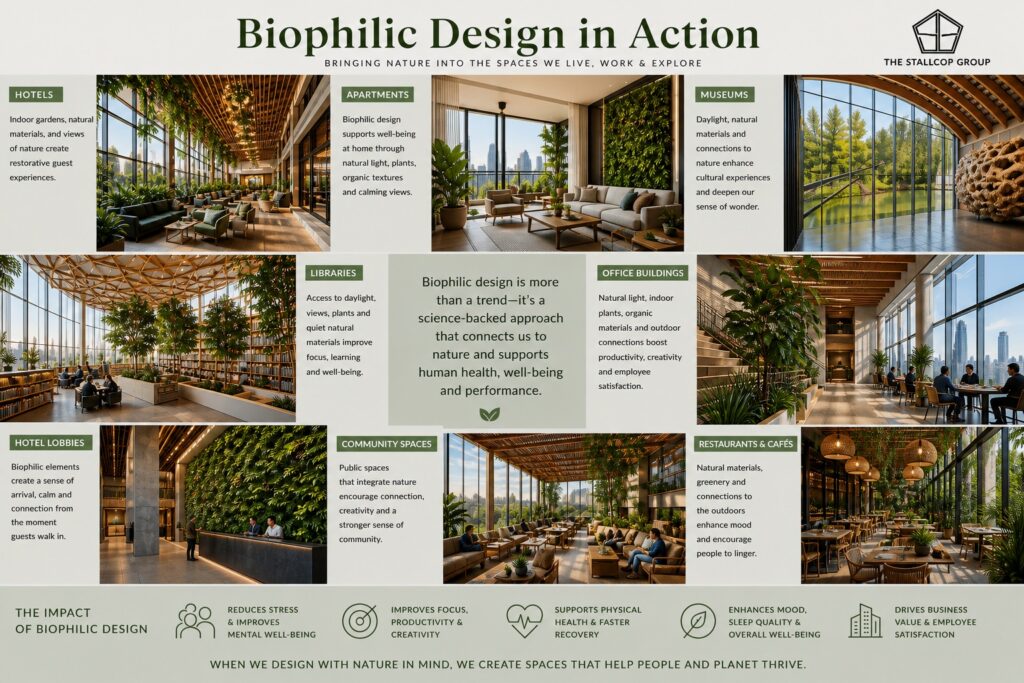
At the International Mass Timber Conference five weeks ago, the concepts of 𝐛𝐢𝐨𝐩𝐡𝐢𝐥𝐢𝐚 and 𝐛𝐢𝐨𝐩𝐡𝐢𝐥𝐢𝐜 𝐝𝐞𝐬𝐢𝐠𝐧 came up everywhere, across educational sessions, exhibitor booths, and even in casual conversations.
Yet outside of the mass timber industry, many people aren’t familiar with what 𝐛𝐢𝐨𝐩𝐡𝐢𝐥𝐢𝐚 actually means. So, I wanted to take a moment to break it down and highlight why it matters, because its impact on human well-being is more significant than most people realize.
𝐁𝐢𝐨𝐩𝐡𝐢𝐥𝐢𝐚 – the idea that humans have an innate connection to nature, isn’t just philosophical; it’s biological. Our brains and bodies are wired to respond positively to natural environments, even in subtle ways.
𝐁𝐢𝐨𝐩𝐡𝐢𝐥𝐢𝐜 𝐝𝐞𝐬𝐢𝐠𝐧 takes this concept and applies it to the built world, integrating exposed wood, natural light, greenery, organic materials, water, airflow, and nature-inspired forms into our homes, workplaces, and cities. It’s not about aesthetics alone; it’s about designing spaces that align with how humans actually function.
𝘞𝘩𝘺 𝘥𝘰𝘦𝘴 𝘵𝘩𝘪𝘴 𝘮𝘢𝘵𝘵𝘦𝘳?
Because the impact is measurable and increasingly hard to ignore:
• Reduced stress and lower cortisol levels
• Improved mood and mental resilience
• Increased focus, cognitive performance, and creativity
• Higher productivity and engagement in workplaces
• Better physical health outcomes, including faster recovery and improved sleep
In workplace environments, these benefits translate directly into business value, stronger employee performance, lower absenteeism, and improved retention. In healthcare and education, they support healing, learning, and overall outcomes.
As more of our lives move indoors and into digital environments, we’re facing a growing “nature deficit.” 𝐁𝐢𝐨𝐩𝐡𝐢𝐥𝐢𝐜 𝐝𝐞𝐬𝐢𝐠𝐧 isn’t a trend, it’s a response to that gap.
𝘛𝘩𝘦 𝘰𝘱𝘱𝘰𝘳𝘵𝘶𝘯𝘪𝘵𝘺 𝘢𝘩𝘦𝘢𝘥 𝘪𝘴 𝘤𝘭𝘦𝘢𝘳:
Design spaces that don’t just look good, but actively support human well-being, performance, and connection.
The future of design isn’t just smart or sustainable. It’s human-centered, and that means bringing nature back into the places we live, work, and build.